

Picture a breakout from a seven-week base with the pivot at 48.20. The stock closes the breakout day at 48.95 on volume running 1.6 times its 50-day average, and the...
A breakout clears resistance, looks convincing for two sessions, then falls back into the range. The losing trade alone tells you very little about whether the setup was...
A growth stock clears a seven-week base with a pivot at 50.00 and closes the breakout session at 51.20. On session 12 it closes at 60.40, which is 20.8% above the pivot...
Two growth stocks report in the same week. Both show earnings per share up about 57% from the same quarter a year earlier, and on a screen they look interchangeable. One...
The index closes at a fresh high, the headlines call it a strong market, and my breakout list has three names on it. Two of them reverse back into their bases within a...
Picture a growth stock that ran from 40.00 to 72.50 in about four months and then stalled. The first pullback took it down to 58.00, a drop of 20.0%. Weeks later the same...
A growth stock clears a base at 54.80, runs for six weeks, and then the weekly chart goes quiet. Three Friday closes land at 61.20, 61.65 and 61.05. On the daily chart...
A stock clears its base, a trader enters at 100.00, and three sessions later the price is sitting at 95.40. The breakout volume has faded. Nothing on the chart says the...
A growth stock runs from 32.00 to 60.00, pulls back to 44.40, works its way back up to 58.90, then drifts for two weeks inside a narrow range just under that high. On a...
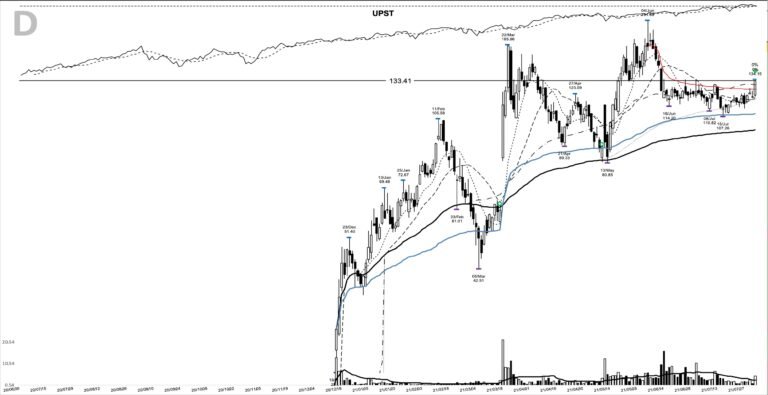
On 2 August 2021, Upstart Holdings closed at 133.41, up from 120.76 the session before and above a 130.9 high that had capped it since 12 July. Six sessions later the...
A base breakout clears its pivot on heavy volume, and the setup on the stock’s own chart looks clean. The benchmark index closed at 4,780 that same day, with its...
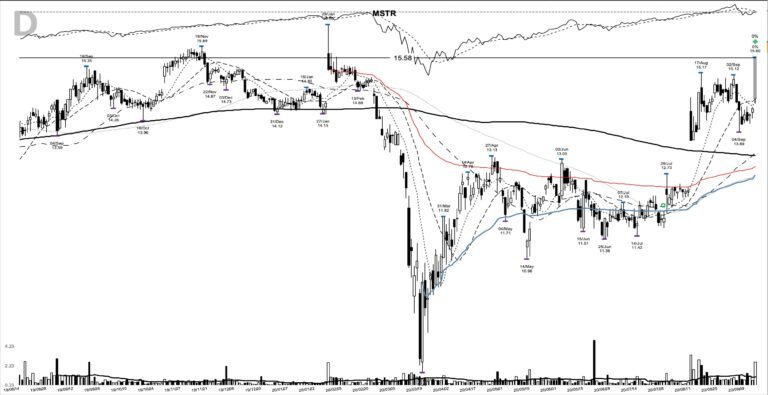
On 15 September 2020, the day MicroStrategy disclosed a second bitcoin purchase worth 175 million dollars, the stock opened at 14.50 and closed at 15.57. That was a week...